Discover Meditation Retreats in Thailand, The Land of Smiles.
For those drawn to meditation, Thailand presents an extraordinary opportunity to grow and mature in practice. But taking this next step on the path requires planning — and planning begins with an honest question: how much time do you actually have?
Introduction
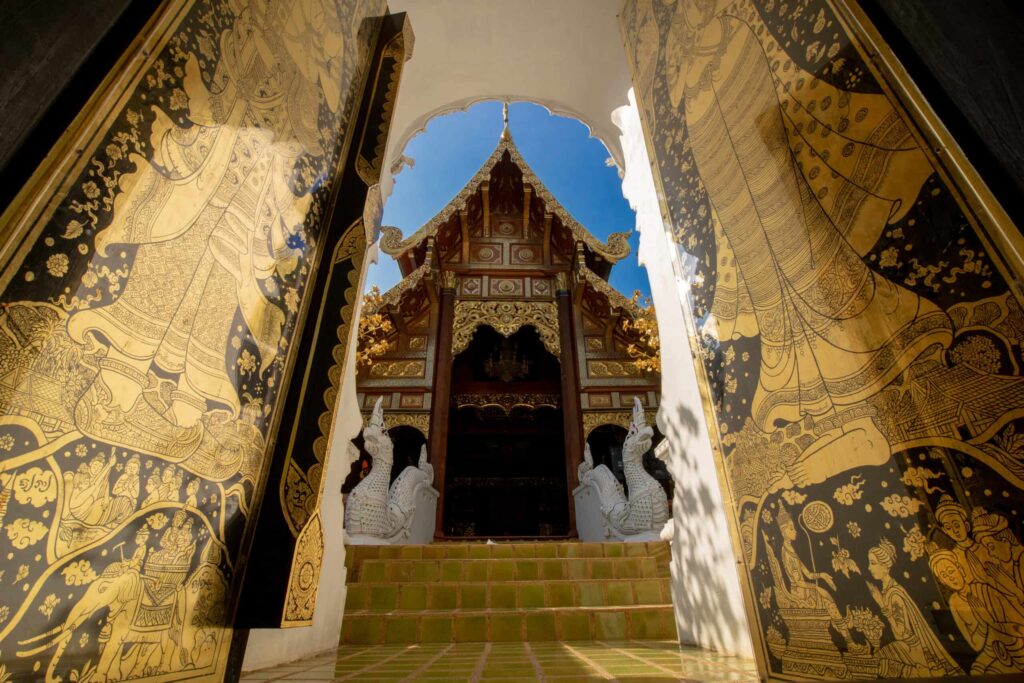
Thailand is one of the most accessible countries in the world for meditation practice – whether you are a curious beginner or seasoned practitioner there are offerings for everyone. More than 200,000 ordained monks reside in Thailand, many of whom you will see walking the streets at dawn for their daily alms rounds.
Thai society has revolved around Buddhism for centuries and its values permeate many facets of daily life in the Kingdom. From the bright orange robes of the urban monastics to the dark umber folds of the forest Sangha, generations of practitioners have created highly favorable conditions for contemplation in every corner of the country.
This guide is organized around life’s essential resource: time. As such, Pilgrimage Asia presents twelve meditation retreat centers in Thailand, from Bangkok to the southern islands, arranged not by location but by what they ask of your time. Whether you have one day or one month, there is a place here for you.
These retreats are all independently organized. Pilgrimage Asia does not operate or receive commissions from these practice centers.
We offer this guide in the spirit of dana (generosity) because we believe in sharing the living tradition of authentic Buddhist practice in Thailand.
Before You Go: A Few Things Worth Knowing
Traditions represented in this guide:
The retreats listed here draw from Theravada, Mahayana, and mindfulness movement traditions. Each has its own style, schedule, and expectations. A short guide to these traditions appears later in this article to help inform your understanding of the diversity of opportunities for contemplative practice in Thailand.
Language:
Most centers in this guide offer international instruction in English, or have English-speaking teachers available. Some centres have instruction opportunities in German, French, Spanish, Chinese, Japanese, Korean, Russian and Vietnamese. Where instruction is primarily in Thai, this has been noted.
Cost:
Most centers in this guide operate on a dana model — the ancient Buddhist practice of offering, where accommodation, meals and teaching are provided freely with participants contributing what they are able. Others charge a modest course fee. None of the retreats listed here are luxury or commercial wellness offerings.
Registration and booking:
Some centers require advance online registration. Others — including some of the most respected — require you to register in person on the day before the retreat begins. Read each center’s registration process carefully before you travel.
practical guidance on what to bring, how to prepare, and what to you can expect before entering the retreat environment.
Not every meaningful practice requires a week away. For those living in or passing through Bangkok, one full day of formal meditation instruction is a genuine beginning — and sometimes, a beginning is exactly what is needed.
Avalokita
| 📍Location | 🕘 Duration | 💬Language | 💰Cost | 📅 Dates |
| Floor.9 , Tang Hua Pug Building, Sathorn, BKK (200 m. from BTS Saint Louis Station) | Evenings 5-9pm | English/Thai | Free | Open daily |
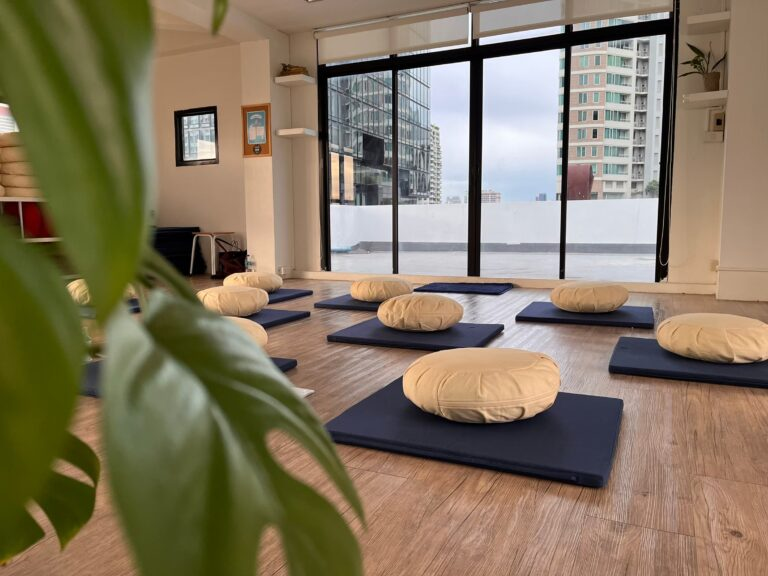
Since its opening on April 4th, 2025, Avalokita has been a beacon of compassion in the heart of Bangkok, offering a space of refuge and a source of light for all who seek solace and inner connection. Located in a small, minimalist 50-square-meter space, Avalokita offers a simple, serene atmosphere with a panoramic view of the city, along with access to a rooftop balcony where visitors can gaze out over the skyline. Avalokita is open daily from 5 pm to 9 pm for sitting meditation, with a daily mantra meditation session including chanting of Om Mani Padme Hum, sending waves of love, compassion, and light to all sentient beings. Avalokita is a project under the Vajrapanna Foundation, a secular Buddhist center inspired by the practice lineage of Chögyam Trungpa Rinpoche and the Nyingma-Kagyu lineage of Tibetan Buddhism that which taken root in the West.
Willpower Institute
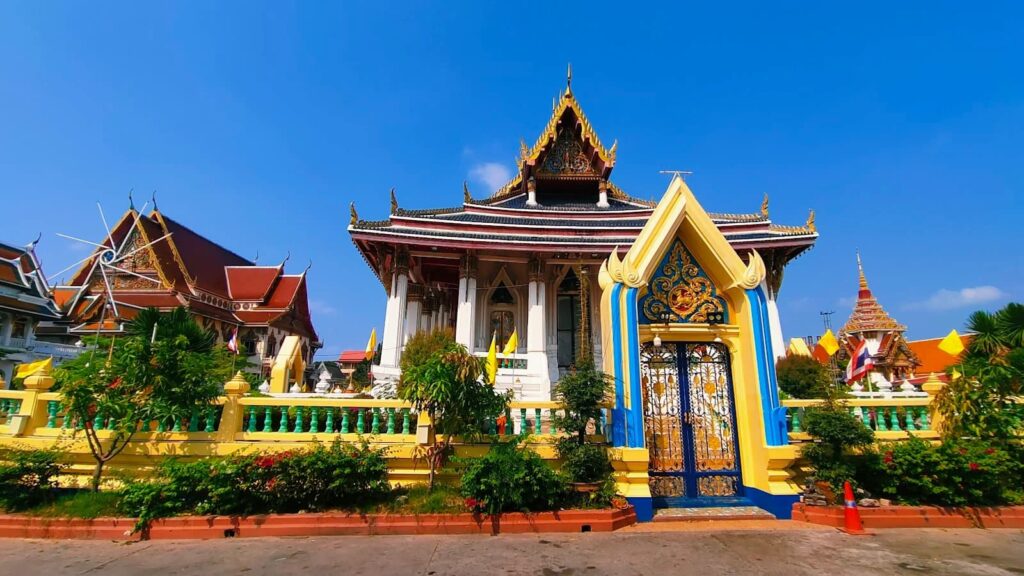
| 📍Location | 🕘 Duration | 💬Language | 💰Cost | 📅 Dates |
| Bangkok (Sukhumvit 101, Wat Dhammamongkol) | One day | English/Thai | Free | Second Saturday of each month |
The Willpower Institute offers its Meditation for Self-Conquering (MSC) course once a month in Bangkok — a full-day, English-language program rooted in the teachings of the late Venerable Luang Phor Viriyang Sirintharo, one of Thailand’s most revered meditation masters of the 20th century. Running from 9am to 4pm, the course is structured and guided, designed for newcomers and those returning to practice alike. It takes place in the heart of the city, at the Wat Dhammamongkol complex — a reminder that stillness does not require a mountain. For those curious but not yet ready to commit to a week or more, this is one of the most accessible entry points to formal meditation practice in Thailand.
Three days is enough time for the noise to begin to settle. These programs are designed for exactly this window — a genuine immersion that fits inside a long weekend accessible for 2 week Thai holiday.
Inner Walk
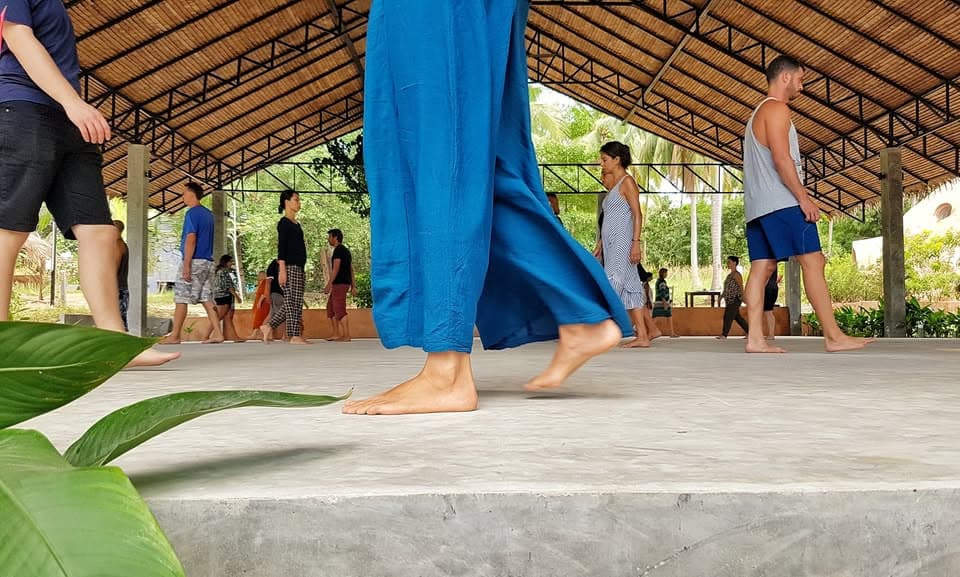
| 📍Location | 🕘 Duration | 💬Language | 💰Cost | 📅 Dates |
| Koh Phangan Island, Southern Thailand | 4 day retreat, morning or afternoon sessions | English | Free | Regular schedule |
Inner Walk is one of the most quietly distinctive meditation offerings in contemporary Thailand. Its practice is based on a single, deceptively simple technique: freestyle walking. Not walking meditation in the classical sense, but an unstructured, free movement practice designed to bring the practitioner into direct contact with the mind’s tendency to drift — to fall asleep into thought and wake back into the present. There are no robes, no cushions, no specific posture to maintain.
The instruction strips practice down to its barest essentials. For those who find seated meditation difficult, or who are curious about how mindfulness lives in the body in motion, Inner Walk offers a genuinely different door into practice. It is an ideal entry point for beginners, and a refreshing challenge for experienced practitioners.
Dipabhavan Meditation Center
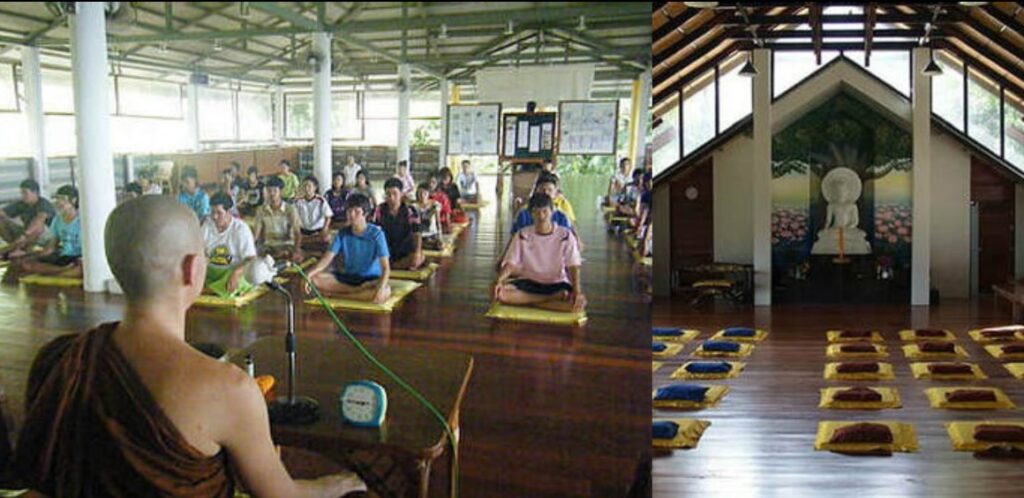
| 📍Location | 🕘 Duration | 💬Language | 💰Cost | 📅 Dates |
| Koh Samui Island, Southern Thailand | 🕘 3-day course / 7-day course | English / Thai / Russian | Free | Monthly schedule on website |
Nestled at the top of a hill overlooking the emerald seas surrounding Koh Samui, Dipabhavan is a remarkable island practice center established in the lineage of Buddhadasa Bhikkhu – the closest thing to a patron saint in the Thai Socially Engaged Buddhist movement. Buddhadasa’s outspoken advocacy for institutional reform was grounded in his unwavering commitment to the naturalistic foundations of the Buddha’s teachings, an approach that is embodied by Dipabhavan’s experienced teachers and reflected in the center’s open walled practice halls.
Jungle fringed pathways crisscross the center providing an immersive environment for the walking meditation periods that break up a substantial daily schedule of sitting practice and evening dharma talks. Accessible hatha yoga sessions are integrated in the early mornings to loosen the muscles and mind with noble silence encouraged for the entirety of the retreat.
Note: Dipabhavan offer 3-day courses and 7 day courses each month. All information is available on their website
The seven to ten-day retreat is the most commonly recommended entry point for sincere practice. It is long enough to pass through the initial restlessness and arrive somewhere quieter. Short enough to plan around work, family, and the logistics of travel. Many teachers consider this the minimum meaningful duration for Vipassana practice. The centers listed here represent some of the most respected in Thailand.
Wat Suan Mokkh – International Dharma Hermitage
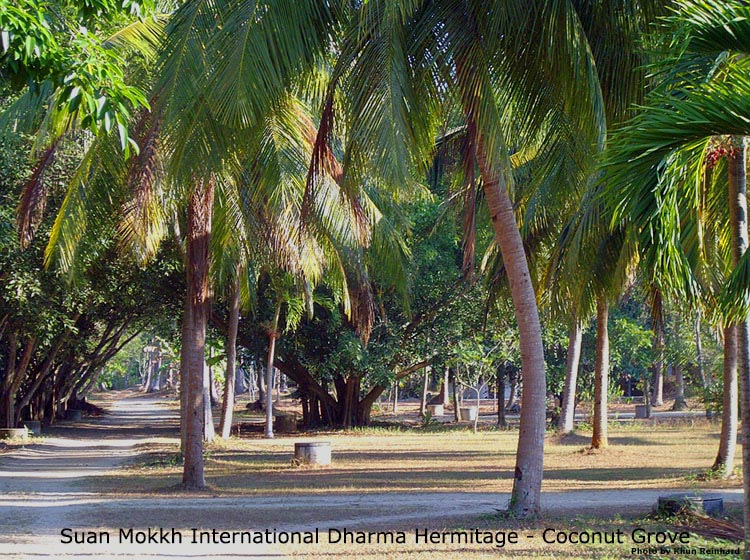
| 📍Location | 🕘 Duration | 💬Language | 💰Cost | 📅 Dates |
| Chaiya, Surat Thani, Southern Thailand | 10 days (1st–11th of each month) | English/Thai | 2,000 baht | Monthly |
Founded in 1932 by Buddhadasa Bhikkhu, Wat Suan Mokkh grew into one of the most innovative and progressive Theravada Buddhist teaching centers of the 20th century, commanding a powerful reformist influence on modern Thai Buddhism. In 1972, His Holiness the 14th Dalai Lama made a personal visit to Wat Suan Mokkh to discuss the merits of apanasati (mindfulness with breathing) with Ajahn Buddhadasa. This 16 step technique for the development of a peaceful, concentrated and penetrating mind was transmitted directly from the historical Buddha’s teachings and remains the core method of instruction at the International Dharma Hermitage.
The sprawling hermitage is located inside a quiet coconut grove opposite the main monastery. The 10 day silent retreat schedule offered from the 1st – 11th of each month encompasses 8 hours of daily sitting meditation with regular breaks for walking meditation. Nutritious Thai vegan and vegetarian meals become more delicious as the practice deepens as do the evening bathing opportunities in the steaming natural hot springs within the compound. Accommodation is thoroughly monastic with a simple woven mat and wooden pillow inside of a private dormitory room. Wat Suan Mokkh offers the heartiest immersion in nature-based Buddhist practice that this article’s author has experienced. The structure of this retreat will challenge and reward every participant in unexpectedly profound ways.
Note: Registration is in person only, on the last day of the previous month. There is no option for advance booking. This is unusual and important for travelers to plan around — it means arriving in Chaiya/Surat Thani the day before the retreat begins.
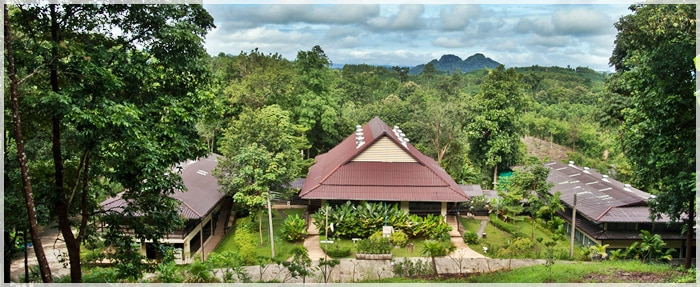
Vipassana Meditation — S.N. Goenka (Kanchanaburi Center)
| 📍Location | 🕘 Duration | 💬Language | 💰Cost | 📅 Dates |
| Kanchanaburi, Central Thailand (approx. 2–3 hours from Bangkok) | 10 days | English / Thai | Free | Monthly schedule, advance booking required |
The Goenka 10-day retreat is probably the most widely attended secular Vipassana program in the world, with centers in nearly every country and nine locations across Thailand alone. The Kanchanaburi center is the most accessible from Bangkok. The format is intensive and non-negotiable: ten days of noble silence, ten hours of meditation daily, no phones, no reading, no writing. The technique is body-scanning Vipassana, taught systematically without religious ritual, making it genuinely accessible to practitioners of any background. It is not easy. It is also intense — and for those ready to meet it on those terms, it is one of the most transformative meditation experiences available in the country. Courses run on a dana basis; all costs are met through the voluntary offerings of past students.
Note: Courses are very popular and require an application to be submitted well in advance. Clear instructions are available on the website as well as alternative vipassana centers in Thailand if the Kanchanaburi location is full.
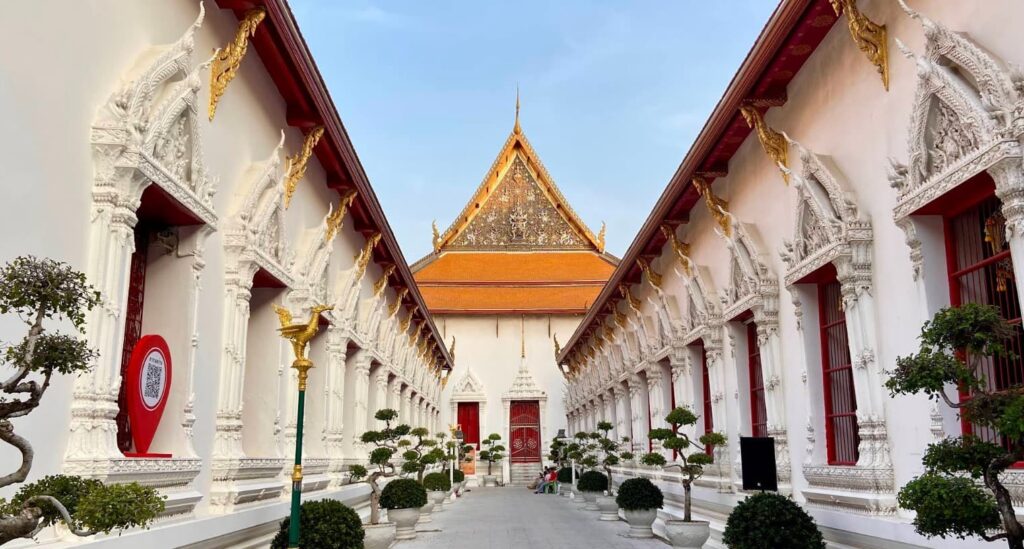
Wat Mahathat
| 📍Location | 🕘 Duration | 💬Language | 💰Cost | 📅 Dates |
| Bangkok (near the Royal Palace, Rattanakosin Island) | Variable — open to practitioners; contact center for current course structure | Thai primary; English guidance available | Free | Regular weekly offerings |
Wat Mahathat occupies one of the most spiritually significant addresses in Bangkok — a royal monastery steps from the Grand Palace, where formal Vipassana instruction has been offered to practitioners for decades. The tradition here is rooted in the Mahasi Sayadaw lineage (Myanmar), one of the most respected schools of insight meditation in the Theravada world. Practice develops concentration through attention to the rise and fall of the abdomen, gradually expanding to awareness of all physical and mental phenomena as they arise. For those spending time in Bangkok who want to practice within an authentic urban temple environment — experiencing authentic Thai Buddhist life happening around them, not staged for them — Wat Mahathat is an exceptional option.
These programs ask more of you. More time, more stillness, more willingness to stay when the mind wants to leave. They are not designed for beginners seeking a taste – this is a full meal. They are designed for those ready to go further: past the initial opening, into the sustained inquiry that only extended time makes possible. If you are considering a retreat of this length, give yourself full permission to follow the journey through to the end.
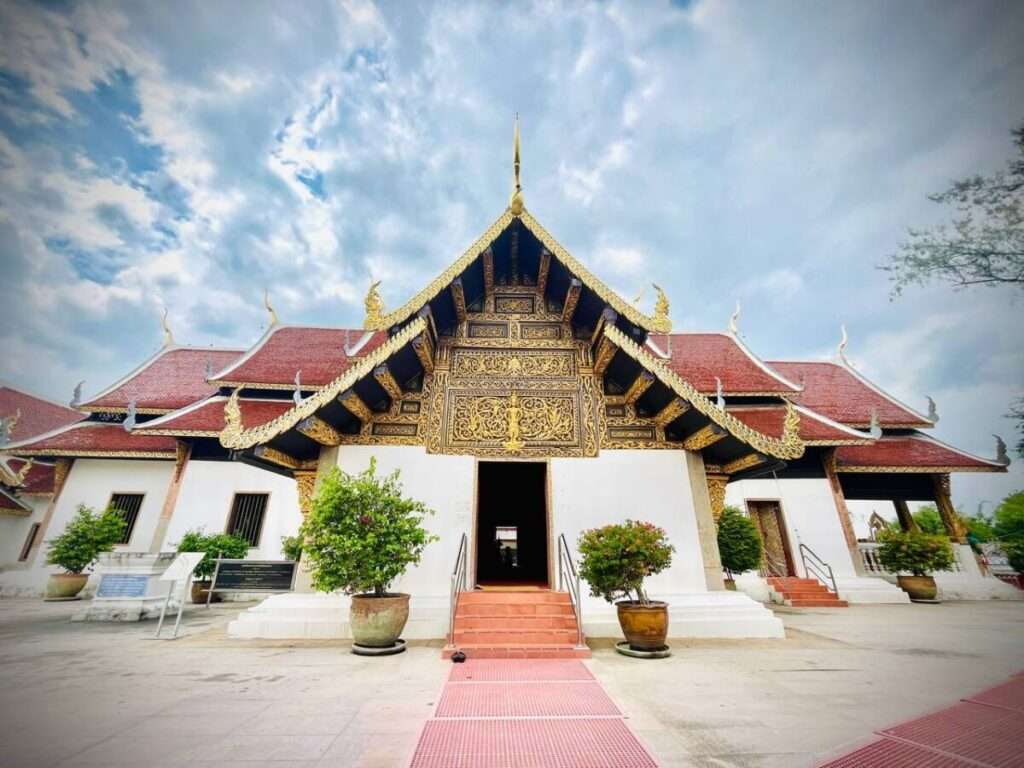
Wat Phradhatu Sri Chomtong Voravihara – Chiang mai
| 📍Location | 🕘 Duration | 💬Language | 💰Cost | 📅 Dates |
| Chom Thong, Chiang Mai Province, Northern Thailand | 5–10 days and 21-day courses | English, French, German, and Thai | Free | Regular monthly schedule |
Wat Chomtong is one of the most internationally respected meditation centers in Northern Thailand, sitting at the foot of Doi Inthanon — Thailand’s highest peak. International students are guided through the four foundations of mindfulness by resident monk-teachers (Phra Ajahn) who teach in English, French, and German, making this one of the most genuinely multilingual practice environments in the country. The 21-day course offers a serious, structured curriculum that moves through the foundations of mindfulness systematically, with daily teacher interviews to support individual practice. For practitioners who want depth, personal guidance, and a proven traditional curriculum, this is one of the finest options in all of Thailand.
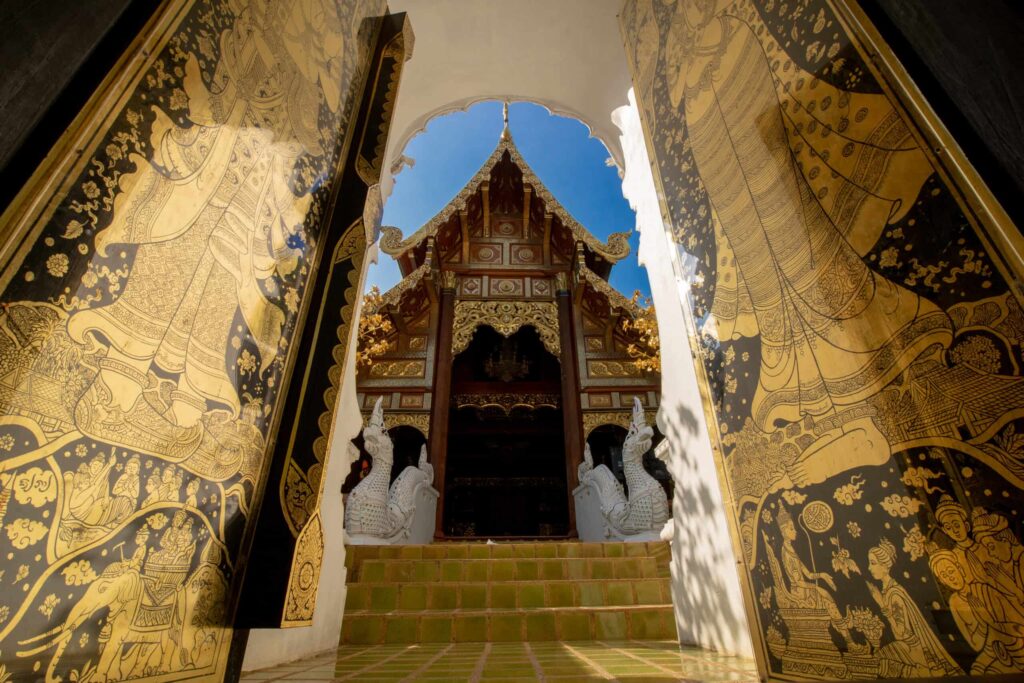
Wat Ram Poeng – Chiang Mai
| 📍Location | 🕘 Duration | 💬Language | 💰Cost | 📅 Dates |
| Chiang Mai, Northern Thailand | 26 days | English / Thai | Free | Regular monthly schedule |
Tucked within the old city near the old moat of Chiang Mai, Wat Ram Poeng — formally known as Tapotaram — has quietly welcomed serious international practitioners for decades. The practice follows the Northern Thai Theravada style, a close relative of the Mahasi Sayadaw lineage (Myanmar), with instruction moving from basic breath awareness into full-body mindfulness and mental noting. Wat Ram Poeng offers a comprehensive 26-day course in Vipassana (Insight) Meditation under the daily guidance of a monk on an on-going basis. For meditators who have completed the basic course, a 10-day Insight Meditation retreat can be taken, which builds on the 26-day basic course. This offering is for those practitioners seeking a deep immersion in contemplative practice supported by the discipline of the traditional temple environment.
Wat Pah Nanachat – International Forest Monastery
| 📍Location | 🕘 Duration | 💬Language | 💰Cost | 📅 Dates |
| Ubon Ratchathani, Northeastern Thailand | 🕘 Extended stays (monastic format) | English (primary language of instruction) | Free | Check website carefully for visitor guidelines |
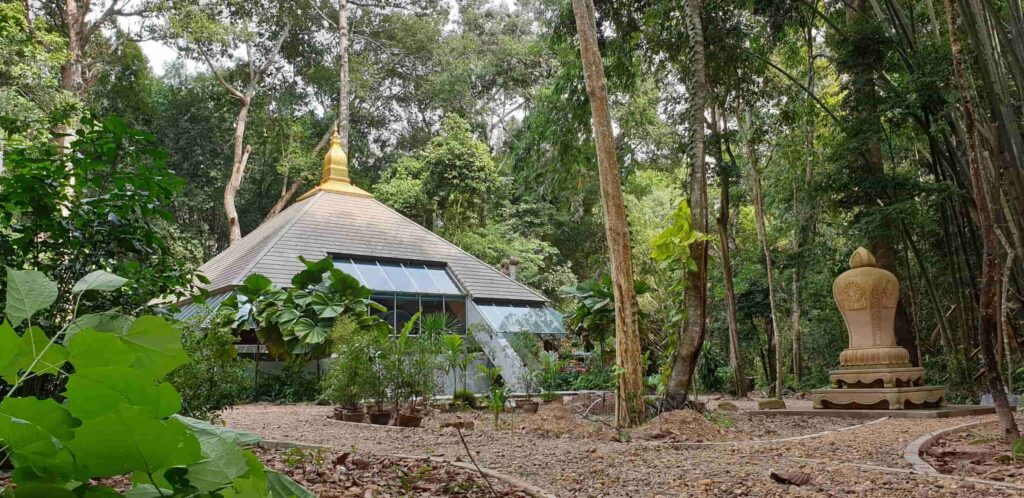
Wat Pah Nanachat is unlike any other center in this guide. Founded in 1975 by the great forest master Ajahn Chah specifically for Western practitioners who lacked the language and cultural background to train in Thai-language monasteries, it remains one of the most respected Theravada forest monasteries in the world accessible to international visitors. Practice here is not a course — it is monastic life. Visitors follow the full schedule of the monks: early rising, alms rounds, working meditation, communal silence, and daily Dhamma teachings in English. It is a serious commitment, and one of the most authentic encounters with living Theravada forest tradition available outside of a formal ordination. Men wishing to ordain temporarily as monks will find this one of the most supported environments in Southeast Asia for doing so.
Note: Visitors should check the current visitor policy carefully — requirements around prior meditation experience, length of stay, and conduct have specific guidelines. This center suits experienced practitioners more than beginners.
Not every path has a fixed schedule. These centers welcome practitioners on a seasonal and ongoing basis, and several operate as living communities rather than structured course programs. They are particularly well suited to independent travelers, longer-stay visitors, or those building a personal practice without the framework of a fixed retreat timeline.
Thai Plum Village International Practice Center
| 📍Location | 🕘 Duration | 💬Language | 💰Cost | 📅 Dates |
| Pak Chong, Nakhon Ratchasima, Central-Northeastern Thailand | Flexible retreat stays | English / Thai / Vietnamese | Variable depending on length of stay, check website for details | Check website for program schedule |
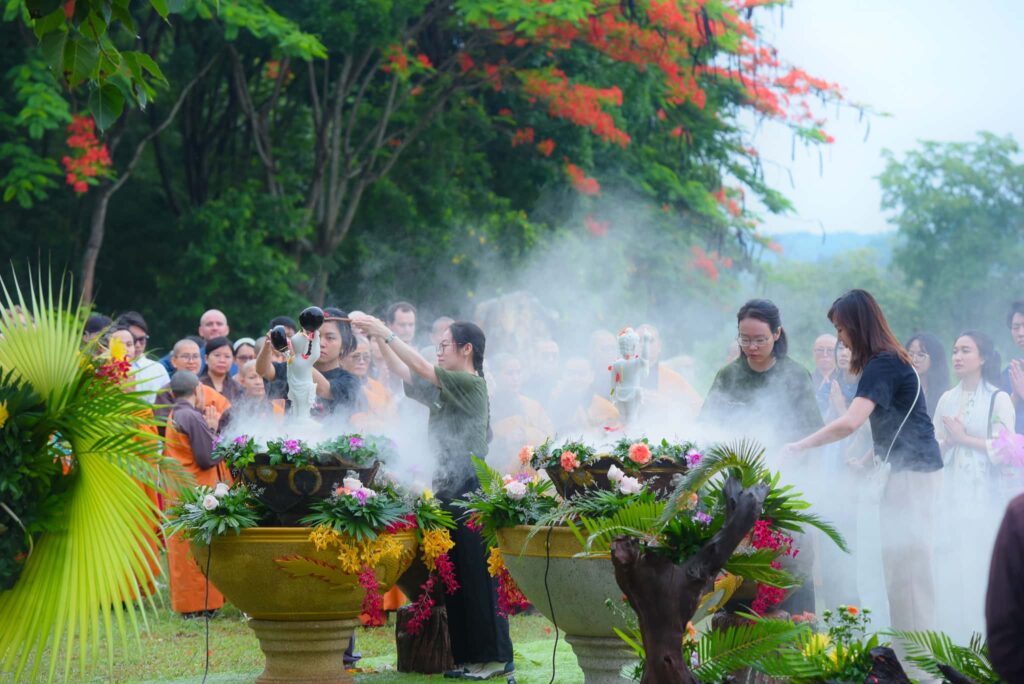
The largest Asia practice center founded by legendary Vietnamese Zen Master Thich Nhat Hanh, Thai Plum Village is a living monastic community of more than 200 male and female members of the Order of Interbeing. A celebrated social activist, Martin Luther King Jr. nominated Thich Nhat Hanh for the Nobel Peace prize following his courageous non-violent organising in response to the Vietnam War. Affectionately referred to as Thay, Thich Nhat Hanh coined the term Engaged Buddhism and – following his passing in 2022 – his robust following continues to advocate for social justice and community empowerment through a cornucopia of activities across the world.
Thay’s Buddhist teachings are at once accessible and profound with the annual Holiday Retreat at Thai Plum Village regularly topping 500 attendees. The center follows has communal practice model that emphasizes inclusivity and everyday mindfulness of eating, walking, talking and working. Located in close proximity to the lush greenery of Khao Yai – Thailand’s first national park – the family friendly center offers various courses and programs ranging from half days to 3 month small intake ordinations, many of which fill up within hours of their announcement on the website. The center is a safe space and an outstanding ally of the LGBTQI+ community in the Thai Buddhist landscape.
Wat Pa Tam Wua
| 📍Location | 🕘 Duration | 💬Language | 💰Cost | 📅 Dates |
| Mae Hong Son, Northern Thailand | 🕘 Flexible — open to all year round | Thai / English | Free | Open on rolling basis |
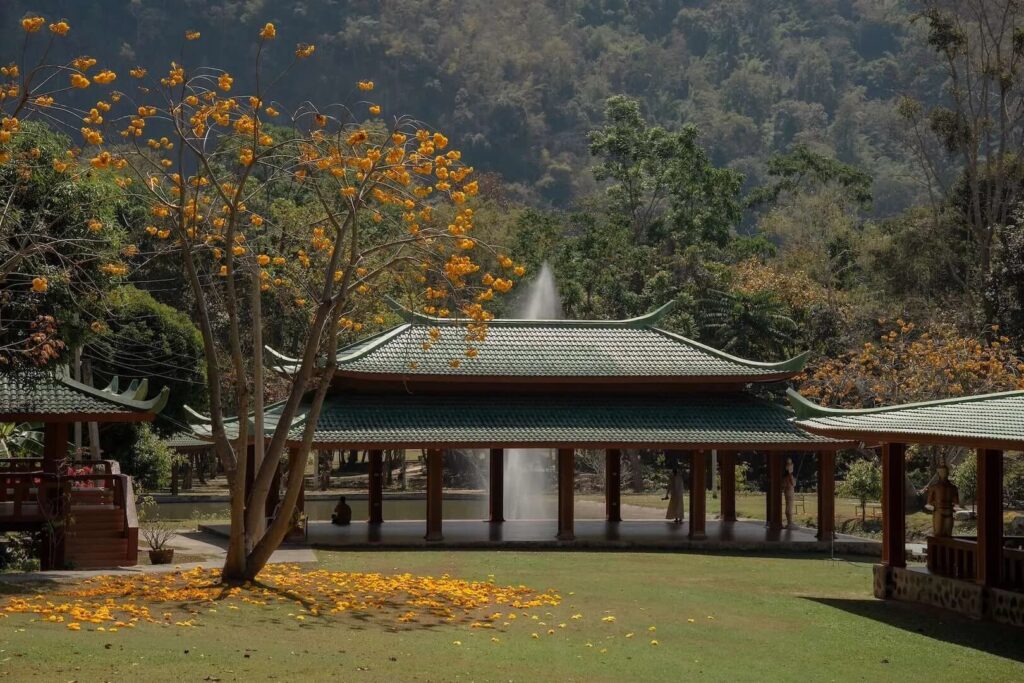
Deep in Mae Hong Son province, one of the most remote and forested corners of Northern Thailand, Wat Pa Tam Wua offers something increasingly rare: open doors. No fixed start dates. No course structure you must enter and complete. Accommodation, vegetarian food, and white practice clothes are provided freely to all who come, funded entirely by donation. The temple asks only that you come with sincerity and willingness to practice. For solo travelers, long-stay visitors, or those who simply need to disappear into the forest for a while without the pressure of a structured program, this is an extraordinary offering — and one of the most generous expressions of the dana spirit in Thailand.
Understanding Meditation Traditions — A Brief Orientation
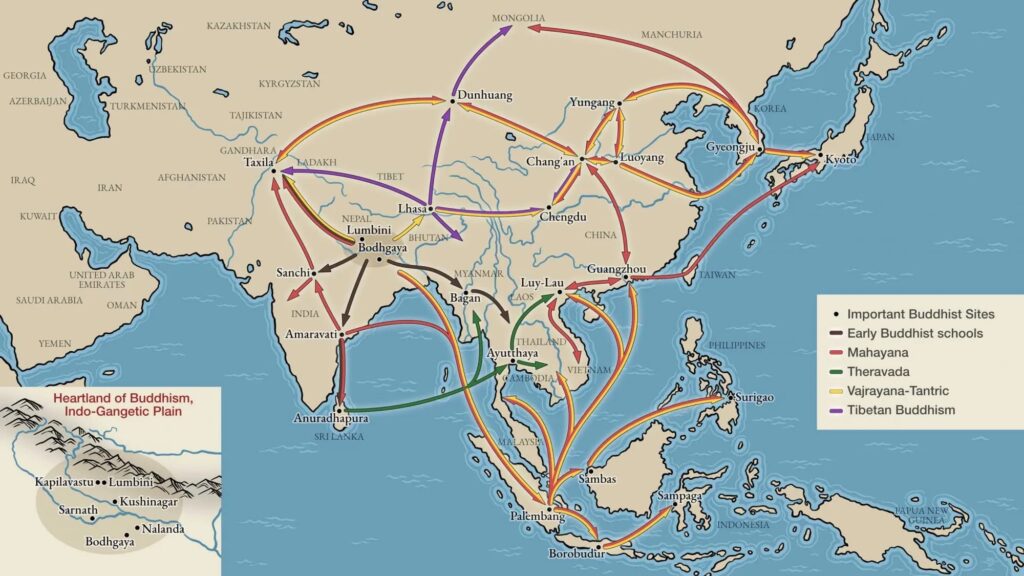
Buddhism has never been a single, uniform path. Over 2,500 years it has branched, adapted, and taken root in remarkably different cultural soils — producing distinct traditions, each with its own understanding of practice, community, and the nature of mind. The retreats in this guide draw from three of these great streams: Theravada, Mahayana, and Vajrayana.
Understanding the broad shape of each tradition — and the specific lineages within it — will help you choose not just a center that is convenient or available, but one whose approach genuinely resonates with where you are in your practice.
Theravada is the oldest surviving school of Buddhist thought and the living tradition of mainland Southeast Asia — Thailand, Myanmar, Sri Lanka, Cambodia, and Laos. Its name means the teaching of the elders, reflecting its commitment to preserving the earliest recorded discourses of the historical Buddha. The heart of Theravada practice is Vipassana — insight meditation — rooted in the direct, sustained observation of bodily sensations, mental states, and the breath as they arise and pass away in present-moment experience.
The majority of centers in this guide draw from the Theravada tradition, and within it, several distinct lineages:
Mahasi Sayadaw Lineage (Myanmar)
A highly systematic approach to Vipassana that develops concentration through noting — the quiet mental labeling of arising phenomena. Practitioners observe the rise and fall of the abdomen as a primary anchor, expanding attention progressively to all sensory and mental events. Instruction is precise, structured, and supported by regular teacher interviews. This lineage has produced some of the most rigorous and widely-taught forms of insight practice in the contemporary practice. Centers in this guide: Wat Mahathat (Bangkok) · Wat Ram Poeng (Chiang Mai) · Wat Phradhatu Sri Chomtong (Chiang Mai Province)
Buddhadasa Bhikkhu Lineage (Southern Thailand)
Buddhadasa Bhikkhu (1906–1993) was the most influential Thai Buddhist reformer of the modern era — a scholar, naturalist, and teacher whose interpretation of the Buddha’s teachings emphasized their universal, nature-grounded essence over ritual and doctrinal accumulation. His method focused on the historical Buddha’s anapanasati teaching — mindfulness with breathing — as a complete and sufficient path to liberation, transmitted in the lineage directly from the Buddha’s own recorded instruction. Practice in this lineage is intellectually open, ecologically grounded, and deeply connected to the natural environment. Buddhadasa was also one of the founding voices of the Socially Engaged Buddhist Movement, a thriving grassroots approach to community development focusing on practical application of Buddhist principles to social analysis and reform.
Centers in this guide: Wat Suan Mokkh International Dharma Hermitage (Surat Thani) · Dipabhavan Meditation Center (Koh Samui)
S.N. Goenka Lineage (International / non-sectarian)
The Goenka tradition presents Vipassana as a universal, secular technique available to practitioners of any religion or faith. The method combines anapana breath awareness with systematic body-scanning, taught in an intensive ten-day residential format free of religious ceremony. It is one of the most widely practiced formal meditation methodologies in the world, with a consistent and replicable structure that has introduced millions of people to serious practice. The dana model — where participants pay only what they freely choose, from their own experience — is itself a teaching.
Centers in this guide: Vipassana Meditation — S.N. Goenka (Kanchanaburi)
Thai Forest Tradition (Northeastern thailand)
The Thai Forest Tradition became more widely known in the early 20th century as a deliberate return to the wandering, forest-dwelling practice of the Buddha’s first monastics. Pioneered by the venerated Ajahn Mun and powerfully introduced to western practitioners by Ajahn Chah through his students, this lineage emphasizes simplicity, renunciation, and the deepening of awareness through sustained monastic life rather than structured retreat courses. Ajahn Chah’s Western students have carried this tradition across the globe, making it one of the most internationally recognized expressions of living Theravada practice today.
Centers in this guide: Wat Pah Nanachat (Ubon Ratchathani)
Metta — Loving-Kindness Practice
While not a distinct lineage in the strict sense, the cultivation of metta — loving-kindness and goodwill toward oneself and all beings — stands as a complete practice path in its own right within the Theravada and Mahayana framework. Several centers place metta at the center of their curriculum, either preceding Vipassana practice as a heart-opening foundation, or offered alongside it as a complementary vehicle. For practitioners who find the more analytical process of insight meditation too dry, metta-centered practice opens a genuinely different quality of attention.
Centers in this guide: Thai Plum Village, Buddhamahametta Foundation
Mahayana Buddhism emerged several centuries after the earliest teachings and spread northward through China, Japan, Korea, Vietnam, and parts of Southeast Asia. Its defining aspiration is the Bodhisattva ideal — the commitment to attain awakening not for oneself alone, but in service of the liberation of all beings. Where Theravada tends toward the careful, disciplined investigation of individual experience, Mahayana opens outward toward the relational, the communal, and the social dimensions of practice — asking not only how do I become free? but how does my freedom serve the world?
In the context of Thailand, Mahayana influence is most present through the Vietnamese Zen lineage of Thich Nhat Hanh — the Plum Village tradition — and its living expression in Engaged Buddhism.
Plum Village Tradition / Order of Interbeing (Thich Nhat Hanh lineage)
Founded by the late Thich Nhat Hanh — poet, peace activist, and one of the most widely read Buddhist teachers of the 20th century — the Plum Village tradition is among the most accessible practice forms of contemporary Mahayana Buddhism in the world. Its approach is friendly, communal, and deliberately woven into the texture of everyday life: eating, walking, speaking, and working are all treated as full opportunities for mindfulness practice. The tradition carries a deep and active commitment to social justice, environmental care, and community empowerment — making it a natural home for practitioners drawn to both inner transformation and outer engagement. Thai Plum Village is also an outstanding ally and affirming space for LGBTQI+ practitioners.
Centers in this guide: Thai Plum Village International Practice Center (Pak Chong)
Vajrayana is the third great stream of Buddhist thought, emerging from Mahayana roots and developing most fully in Tibet, Nepal, Bhutan, and parts of China, Mongolia, and Japan. Sometimes referred to as Tantric Buddhism or Tibetan Buddhism, Vajrayana introduces a rich repertoire of practices — visualization, mantra, devotional ritual, and direct transmission from teacher to student — understood as particularly swift vehicles for awakening when approached with the appropriate foundation of ethical conduct and genuine renunciation. It is a tradition that requires long sustained commitment from practitioners to highly qualified scholar-practitioners (lama and geshe) representing a doorway into astonishing depth and abundance of experience.
Vajrayana has a smaller but growing presence in Thailand, particularly in Bangkok, where several centers offer teachings and introductory practices accessible to international students.
Centers in this guide: Avalokita (Bangkok)
Alongside the classical traditions above, a living current of contemporary practice has emerged in the latter part of the 20th century that draws from Buddhist roots while presenting meditation in forms less bound to specific lineage or doctrine. These offerings tend to be gentle, highly accessible, and particularly well-suited to those approaching formal practice for the first time — or to experienced practitioners who wish to explore more deeply how awareness moves in the body.
Centers in this guide: Inner Walk (Koh Phangan)
Pilgrimage Asia can take care of the logistics — so you can focus on the practice.
Finding the right retreat is one thing. Getting there is another. Whether you are arriving in Thailand for the first time or navigating the country’s trains, buses, and island ferries as part of a longer journey, the practical details of retreat travel can quietly consume the time and energy better saved for practice itself.
Pilgrimage Asia offers personal, unhurried planning support for travelers heading to meditation retreats across Thailand.
We can help you with:
- ✅ Transport booking — trains, buses, minivans, and ferries to reach retreat centers across the country, including remote locations in Mae Hong Son, Ubon Ratchathani, and the southern islands
- ✅ Pre and post-retreat accommodation — we know the guesthouses, family-run hotels, and quiet stays near major retreat centers that suit a contemplative pace of travel
- ✅ Arrival timing and itinerary planning — particularly important for centers with fixed monthly start dates or in-person registration requirements
- ✅ Combining your retreat with wider travel in Thailand — if you want to weave a retreat into a longer journey of exploration, cultural immersion, or eco-travel, we can design the full arc.
- ✅ First-time retreatant support — if this is your first silent retreat and you are unsure what to expect, we are happy to talk it through with you before you go
We do not operate the retreat centers listed in this guide, and we do not receive commissions from them. Our support is offered in the same spirit as this guide — because we believe that meaningful practice should be as accessible as possible.
Plan Your Retreat With Confidence
Finding the right retreat is one thing. Arriving prepared is another. Whether this is your first silent retreat or your tenth, having a clear checklist before you travel makes a real difference — to your experience, your peace of mind, and the quality of your practice from the very first day.
We have put together a free, practical guide covering everything you need to consider before you go.
The checklist includes:
- Questions to ask yourself before choosing a retreat — tradition, duration, intensity, and personal readiness
- What to pack for different retreat types, climates, and center requirements (including the white clothes required at some centers)
- Travel and transport logistics within Thailand — reaching remote centers, ferry and train options, and arrival timing for centers with fixed monthly start dates
- Health, diet, and physical preparation — what to expect from a monastic daily schedule
- Dana etiquette — how to offer generously and appropriately in different retreat environments
- How to prepare your mind and your life before entering silence — practical steps for the week before you arrive