Kumano Kodo’s Spiritual Meaning: Origins of Japan’s Sacred Trail

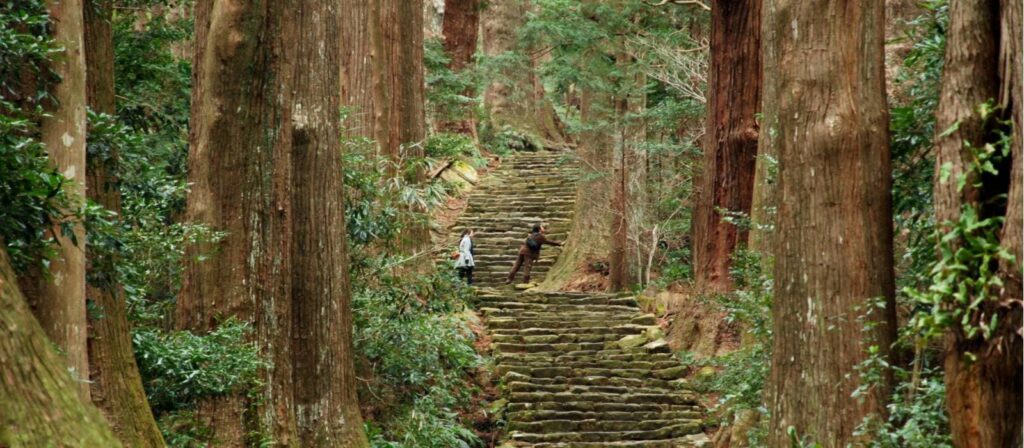
The Kumano Kodo appears on every list of Japan’s great walks. UNESCO listing since 2004 has highlighted its cobblestone paths and cedar canopies in global travel magazines for decades. Thousands arrive each year with hiking poles and carefully researched itineraries leaving with genuinely beautiful photos and a collage of stamps without capturing Kumano Kodo’s spiritual meaning.
The Kumano Kodo was not built for hikers. It was created by pilgrims. The difference is one of intention and inner orientation. To get the most out of Kumano Kodo you must allow the mountains to take something from you.
To understand Kumano Kodo’s spiritual meaning, you have to go back much further than the soothing Instgram reels and detailed trail maps, even past Emperor Uda (who made the first recorded imperial pilgrimage in 907 CE). You have to go back to Yomi.
Yomi — The Land That Pulled People In
Japan’s two oldest surviving chronicles — the Kojiki (古事記, 712 CE, “Record of Ancient Matters”) and the Nihon Shoki (日本書紀, 720 CE, “Chronicles of Japan”) — place the Kii Peninsula at the edge of Yomi-no-Kuni (黄泉の国): the shadowy underworld where the dead descend, a realm of transition beyond the reach of the living.
More specifically, the Kii mountains (Kumano range) were identified in early myth as Ne no Kuni (根の国) — the Root-Land — a threshold between the world of the living and the world below. As scholar Nelly Naumann establishes in her foundational study of the Yomi narrative, the journey into these landscapes carried a cosmological weight that long predated any formal religion: to enter these mountains was to approach the boundary between worlds.
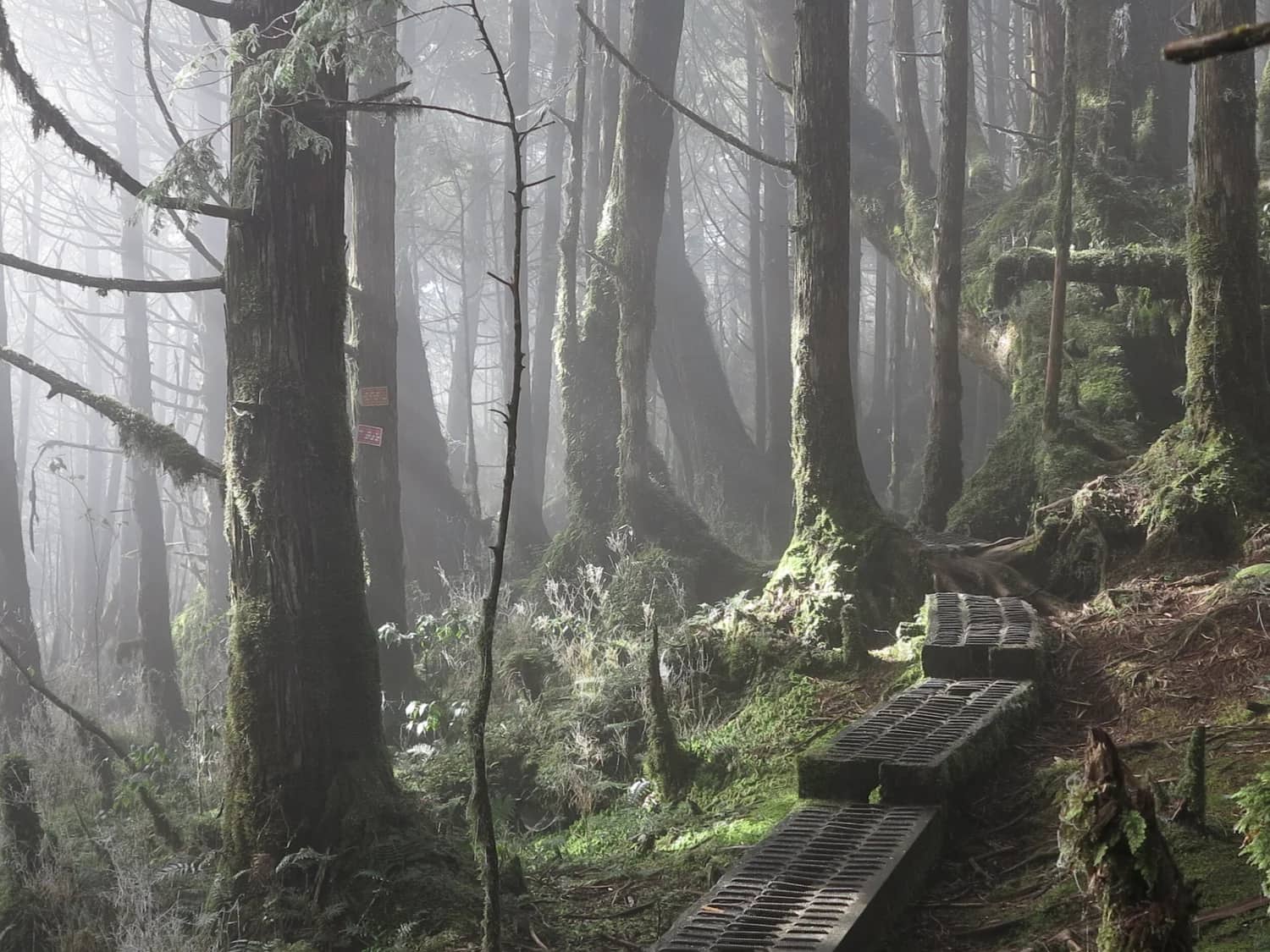
The mountains here were awe-inspiring in every sense: overwhelming, charged with presence, demanding reverence. Ancient trees were understood to be inhabited by spirits. Waterfalls were worshipped as divine. The mountains were the literal abode of Kami (gods).
This was the beginning of the Kumano faithscape — a spirituality so rooted in the landscape of the Kii Peninsula that it could not be separated from it. People came to Kumano to make direct contact with the sacred in all of its animist splendour.
The Arrival of Buddhism — and a Remarkable Fusion
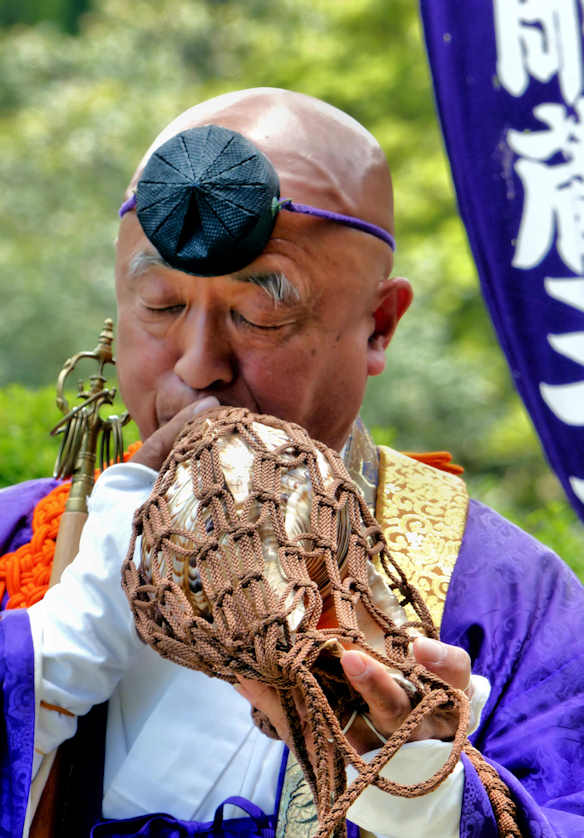
Buddhism arrived in Japan in the 6th century bearing new cosmologies — and Kumano’s aura absorbed them with grace. Rather than conflict, the two traditions merged: the gods of the mountains became understood as manifestations of Buddhist deities, and ascetic monks known as yamabushi (山伏) — those who bow down in the mountains — moved through the forest conducting elaborate rites, embodying their syncretic beliefs in nature-based prayer.
This fusion, called Shinbutsu-shugō, gave the Kumano Kodo its defining character: it was never one religion’s property. As D. Max Moerman, Professor of Asian and Middle Eastern Cultures at Barnard College (Columbia University) and author of the definitive English-language scholarly monograph on the pilgrimage, writes:
For centuries Kumano was the most visited pilgrimage site in Japan and attracted devotees from across the boundaries of sect (Buddhist, Daoist, Shinto), class, and gender… Kumano was thus both a real place and a utopia: a non-place of paradise or enlightenment.”
The three Grand Shrines at the heart of the pilgrimage — Kumano Hongu Taisha, Kumano Nachi Taisha, and Kumano Hayatama Taisha — together formed a complete inner journey: a purification of the past, an encounter with the present, and an opening toward the future.
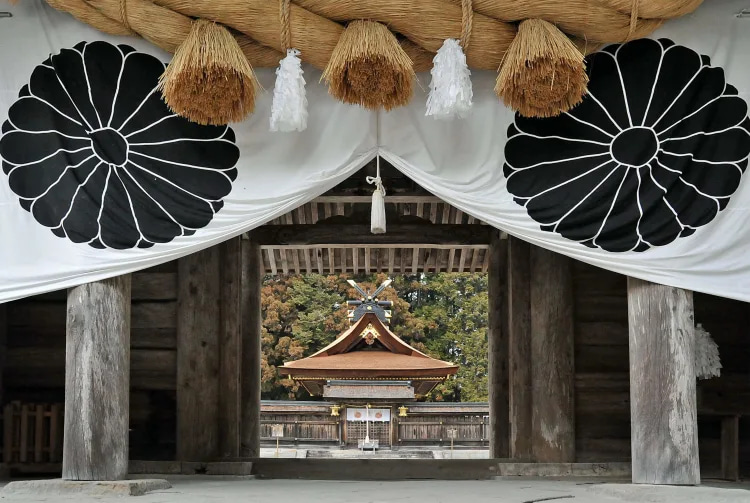
Hongu Taisha
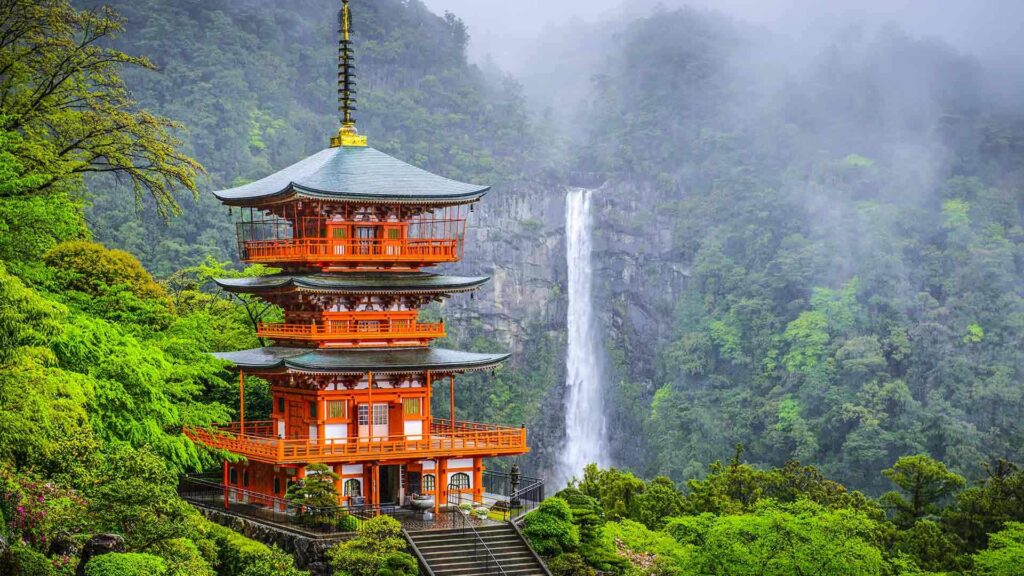
Nachi Taisha
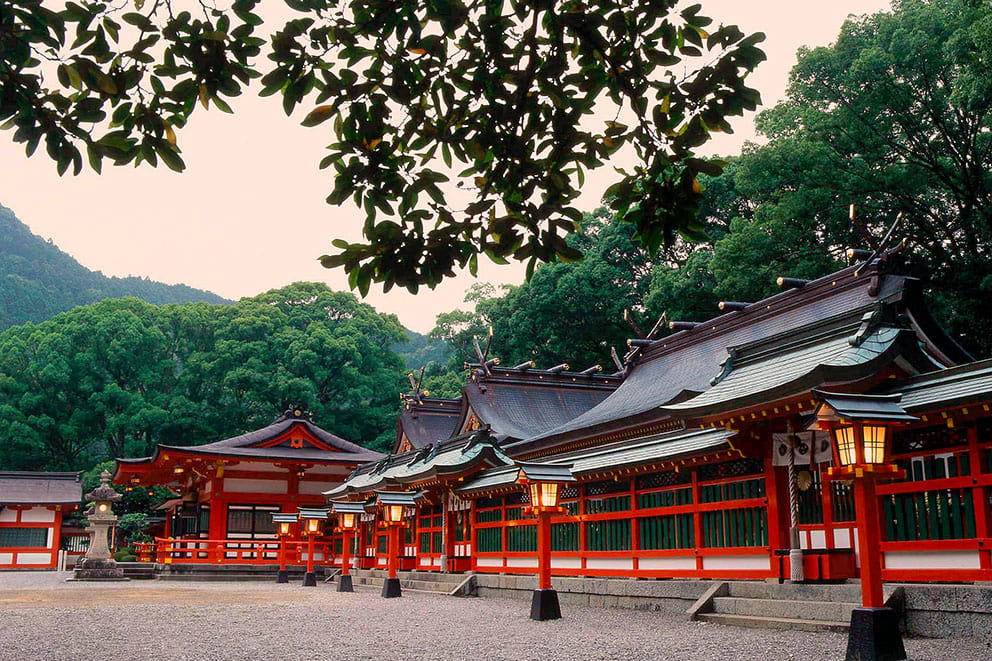
Hatayama Taisha
Kumano Kodo’s Spiritual Meaning: What Pilgrims Seek

Emperor Uda, who made the first recorded imperial pilgrimage in 907 CE, came seeking something the capital could not offer: a place beyond the performance of power. The sick walked the Ogurimichi route toward the hot springs of Yunomine, where the waters were believed to carry healing that medicine could not reach. Monks approaching the end of their lives came to make peace with what awaited them — they remembered the same Yomi-no-Kuni that these mountains had always bordered. Warriors came to shed the weight of their responsibilities and rejuvenate their courage.
What they were all seeking, beneath the specific prayers and particular sufferings, was a version of the same thing: to humble themselves before the majesty of nature.
To stand before something so vast and ancient that their own burdens — their grief, their ambition, their unresolved questions — could find new perspectives.
This is the Kumano Kodo’s spiritual meaning and it is still what people seek here. The forms have changed; the longing has not. The modern pilgrim arriving at these mountains may carry different language for what they need — clarity, healing, renewal, detox — but the mountains do not ask for language. They ask only that you walk the same path that pilgrims have walked for more than 1,000 years, to be humbled and grounded in reverence for nature itself.
Walk Kumano Kodo with Pilgrimage Asia in 2026
Our six-day small-group Kumano Kodo pilgrimage walks the Nakahechi, Kohechi, and Ohechi trails. We stay in traditional homestays, and arrive at all three Grand Shrines on foot — as pilgrims always have.
Sources:
Naumann, N. (1972). “The Yomi Journey in the Kojiki.” Monumenta Nipponica, 27(3), 285–304.
D. Max Moerman, Localizing Paradise: Kumano Pilgrimage and the Religious Landscape of Premodern Japan (Harvard University Asia Center, 2005), p. 3
Japanese Journal of Religious Studies 24, no. 3–4 (Fall 1997): 374
David Moerman, “The Ideology of Landscape and the Theater of State: Insei Pilgrimage to Kumano (1090–1220)”