Discover Talad Noi: 1/2 and Full Day Itineraries in Historic Bangkok
Talad Noi, the historic riverside quarter adjacent to Bangkok’s famous Chinatown, can be explored in a half day (about 4 hours) for its shrines, street art, and coffee culture, or a full day (9AM–9PM) adding heritage tea houses, art galleries and an evening of live jazz. Both routes start at Chow Sue Kong Shrine and end near the Chao Praya river.
Why Talad Noi, and Why Now?
Talad Noi is Bangkok’s official Creative District, named a Bangkok Design Week host neighborhood by the Creative Economy Agency (CEA) as part of the city’s UNESCO Creative City designation. Over 200 years old, it began as a Hokkien-Chinese trading settlement (“Talat Khie”) along the Chao Phraya River and has spent the last decade quietly becoming one of the city’s most funkiest creative pockets all while maintaining active mechanic shops, prayer-cushion upholsters, and historic riverside shrines.
Talad Noi’s story actually predates Bangkok itself. Portuguese traders from Ayutthaya settled here first, building the Holy Rosary Church in 1786, and the area became the city’s first river port — the point where new arrivals landed. When King Rama I moved the capital across the river from Thon Buri to Rattanakosin in 1782, Ayutthaya’s Chinese community was resettled just north in what is now Chinatown proper (Yaworat), while Talad Noi kept growing as a working port and a home for the Hokkien traders, dockworkers, and metalworkers who stayed close to the water.
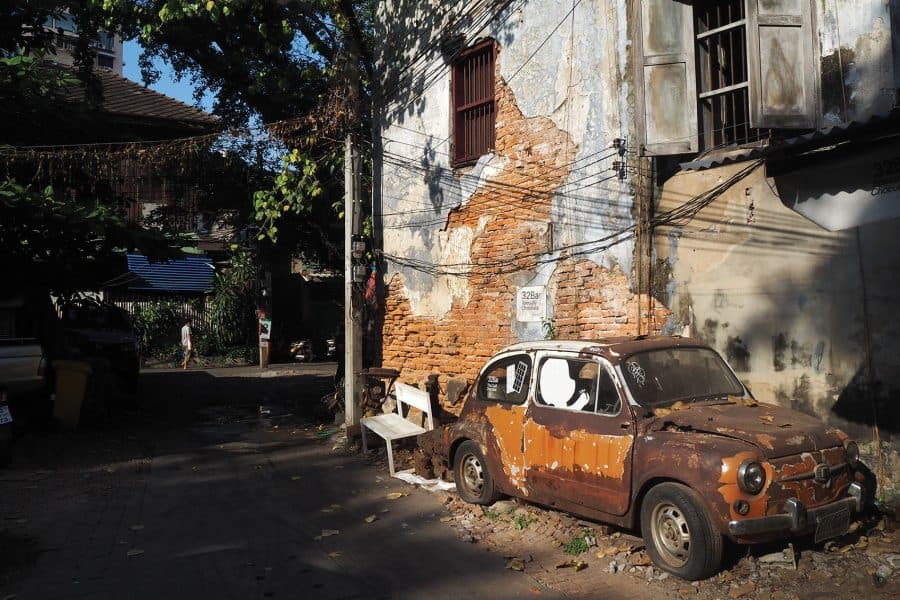
Iconic abandoned car in Talad Noi, a popular photo spot
That distinction still shapes the neighborhood today: greater Chinatown is largely Teochew and built for commerce, while Talad Noi carries a stronger Hokkien imprint, visible in shrines like Chow Sue Kong and courtyard mansions like So Heng Tai. It’s worth remembering that Chinese heritage isn’t a side note to Bangkok’s identity — King Rama I was of half-Chinese descent, and Thai-Chinese families have shaped the country’s politics and commerce for generations, largely without the same ethnic tensions seen elsewhere in the region.
Talad Noi makes that integration tangible: this is a lived-in residential community, not a themed shopping street, where the same families have repaired engines, served tea, and sewn prayer cushions for five generations. Walking it is less a checklist and more a chance to see what everyday Thai-Chinese life actually looks like in Bangkok, just beyond the bustling neon lights of Chinatown.
Half-Day Itinerary — Art, Culture & Coffee
Approx. 4 hours | Best for: first-time visitors, morning light, travelers combining Talad Noi with a Chinatown afternoon.
Start: 9:00 AM (shrines open early; walk is cooler).
Talad Noi wakes up slowly. Incense curls out from Chow Sue Kong before the heat sets in, and there’s just enough time to sit with a cup coffee upstairs at Mother Roaster (opens 9am) or tea at Citizen Tea Canteen (opens 10am), before the neighborhood’s small free museum unpacks the story behind his enhanting corner of Old Bangkok. From the museum the lanes turn visual: spray-painted walls give way to the particular grease-and-jasmine smell of the machine shops, where welded scrap-metal sculptures sit half-hidden among seventy years of unstaged metalwork. It’s a short walk, but a dense one with sacred, historical, artistic, and industrial life layered on top of each other. By lunch, the neighborhood is fully awake with arc welding mechanics, scurrying street cats and tuk-tuks zipping down narrow alleys.
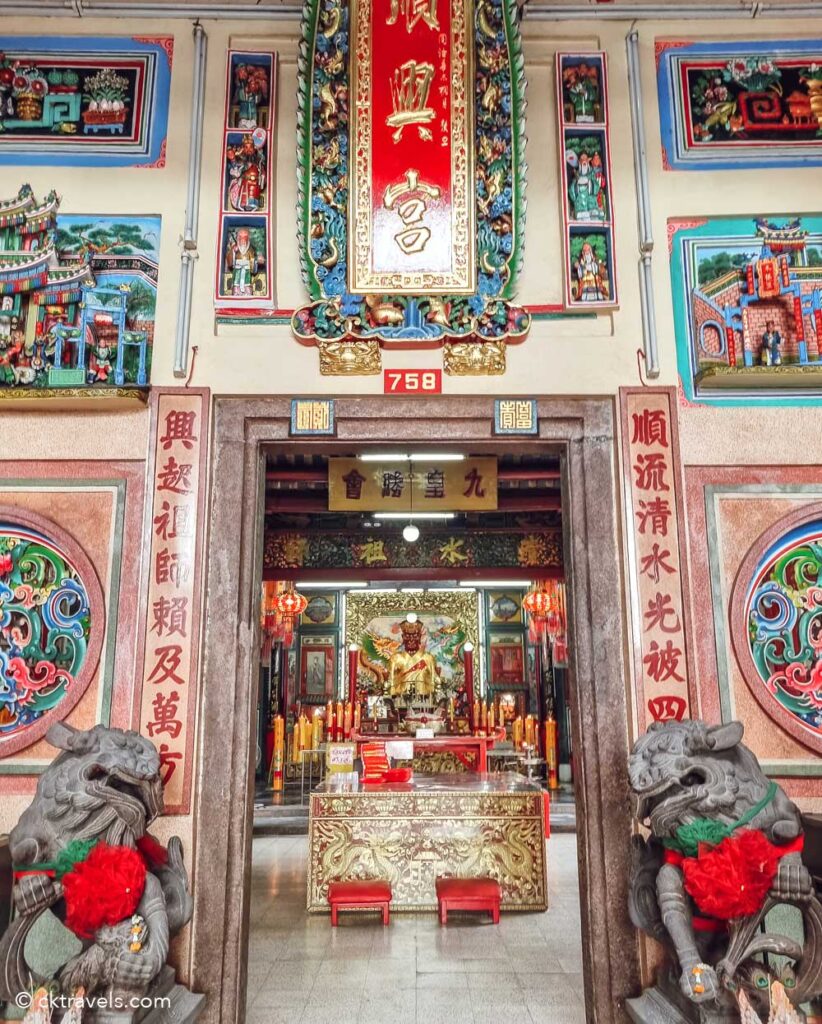
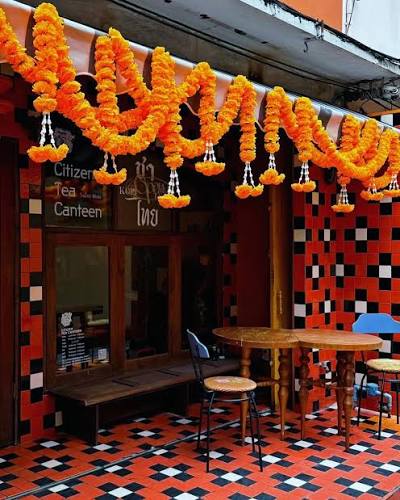
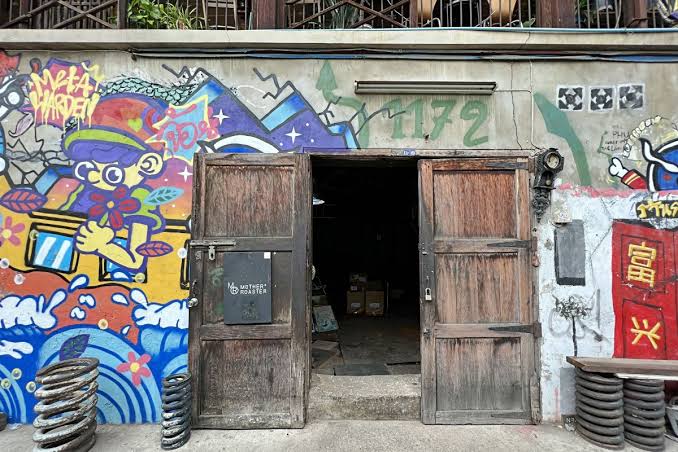
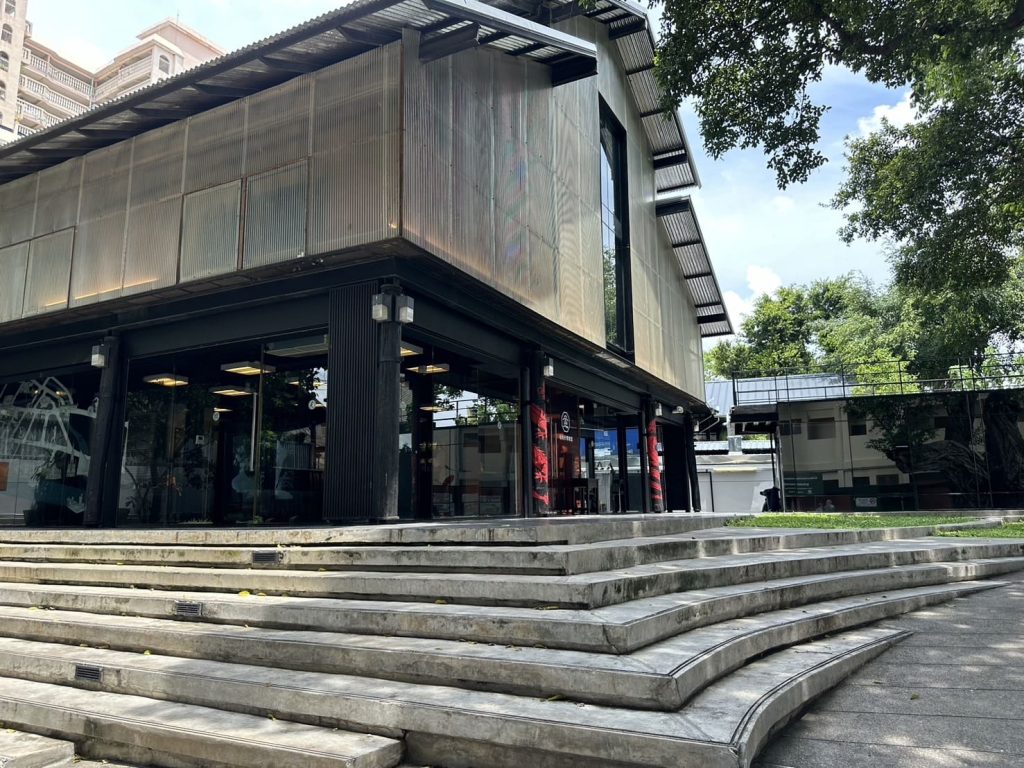
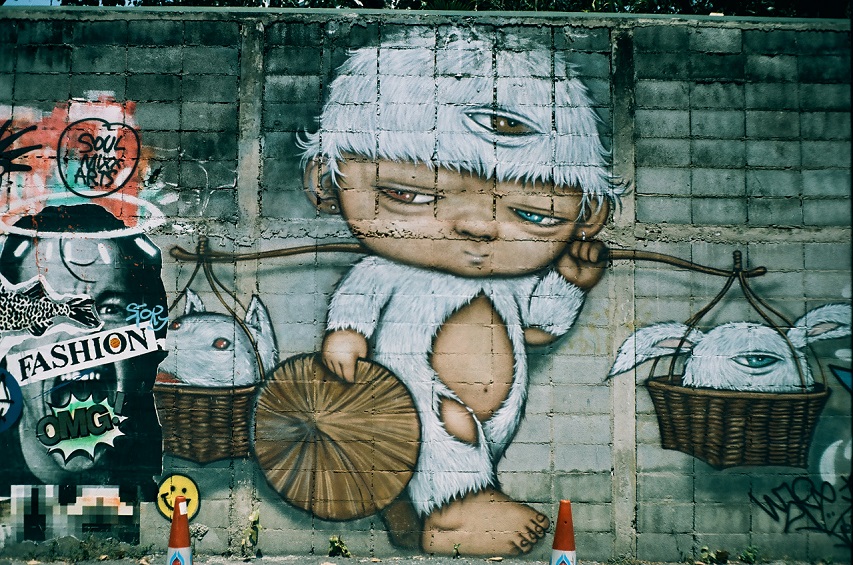
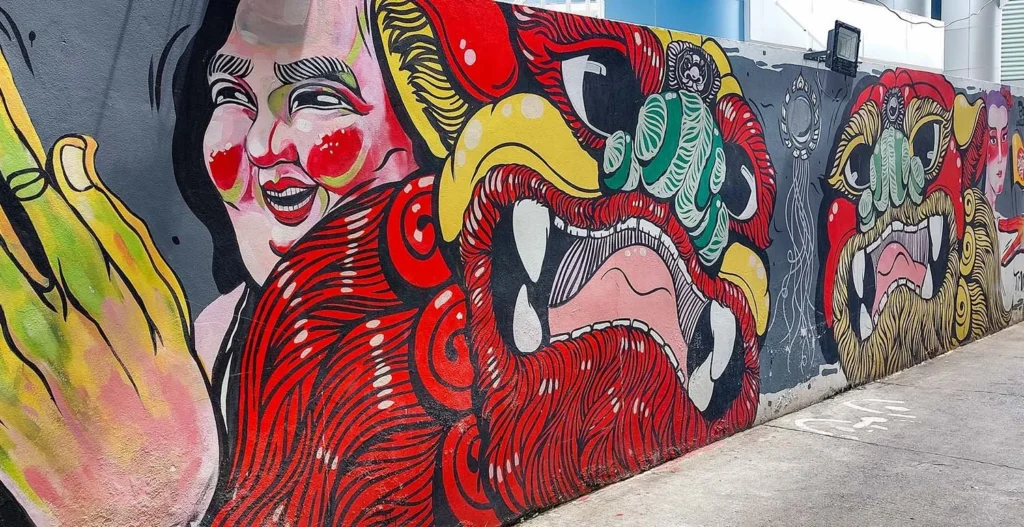
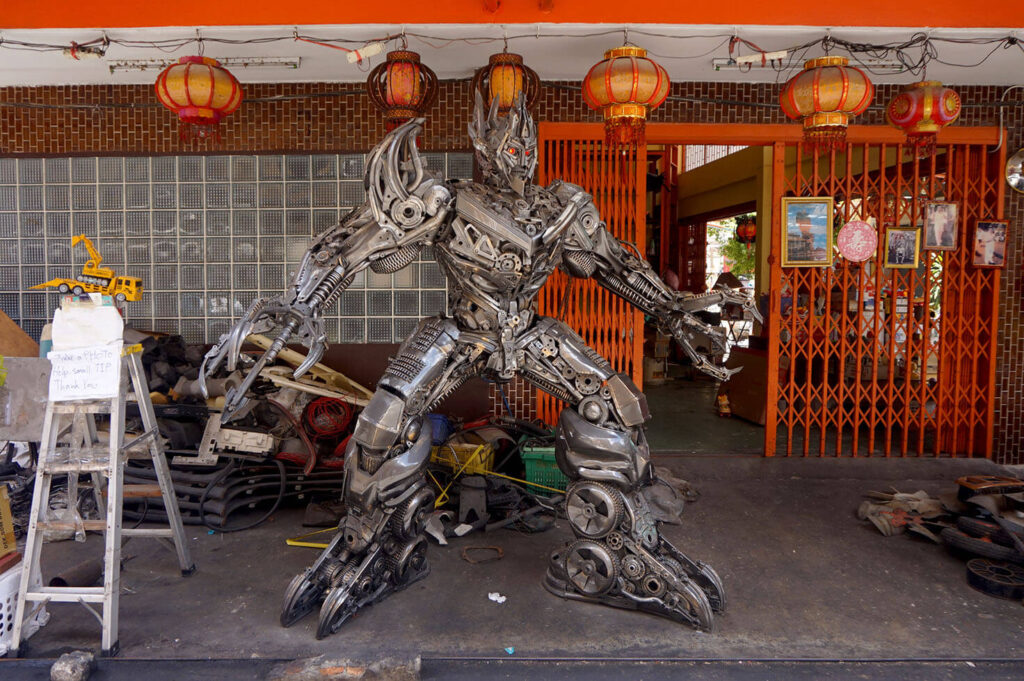
Half Day Itinerary:
| Time | Stop | Theme | Notes |
|---|---|---|---|
| 9:00 AM | Chow Sue Kong Shrine | Culture / Spiritual | Built 1804, oldest Hokkien shrine in the district. Locals pray here for health, peaceful living, and good fortune. Dress modestly. |
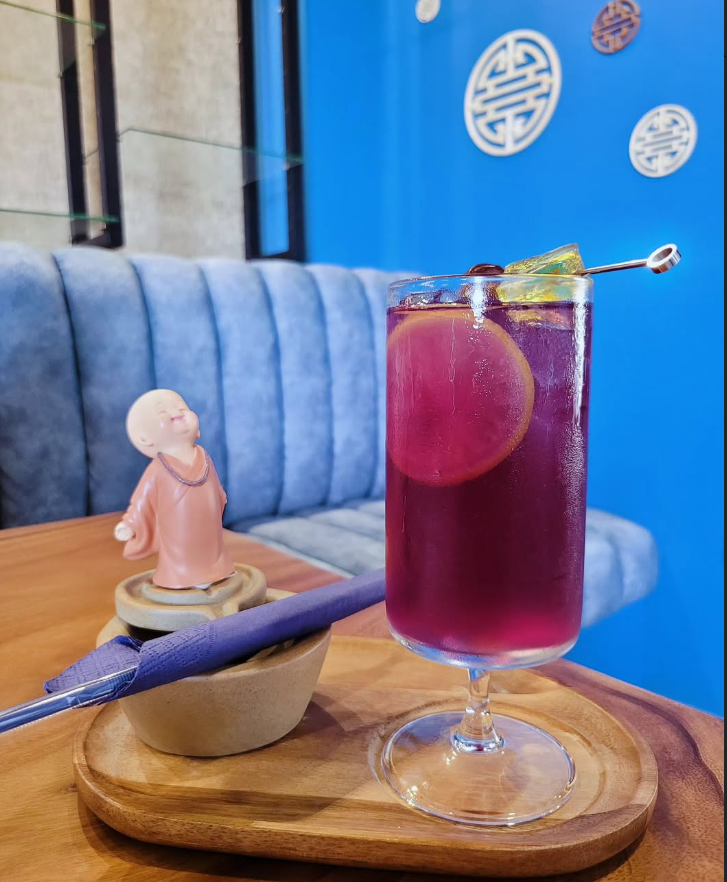
| 9:30 AM | Coffee or Tea — your choice: Mother Roaster Cafe (open 9am coffee) OR Citizen Tea Canteen (open 10 am) | Coffee / Tea | Mother Roaster: drip coffee from small Thai farms, tucked above a scrapyard — founded 2018, one of the shops that started the neighborhood’s café wave. Citizen Tea Canteen: siphon-brewed Thai-provincial teas an alluring shop that doubles as a boutique craft showroom. |
| 10:00 AM | Talad Noi Museum | History | Free entry. Small, community-run and interactive, the museum features old photos and a short intro video to the neighborhood’s story. |
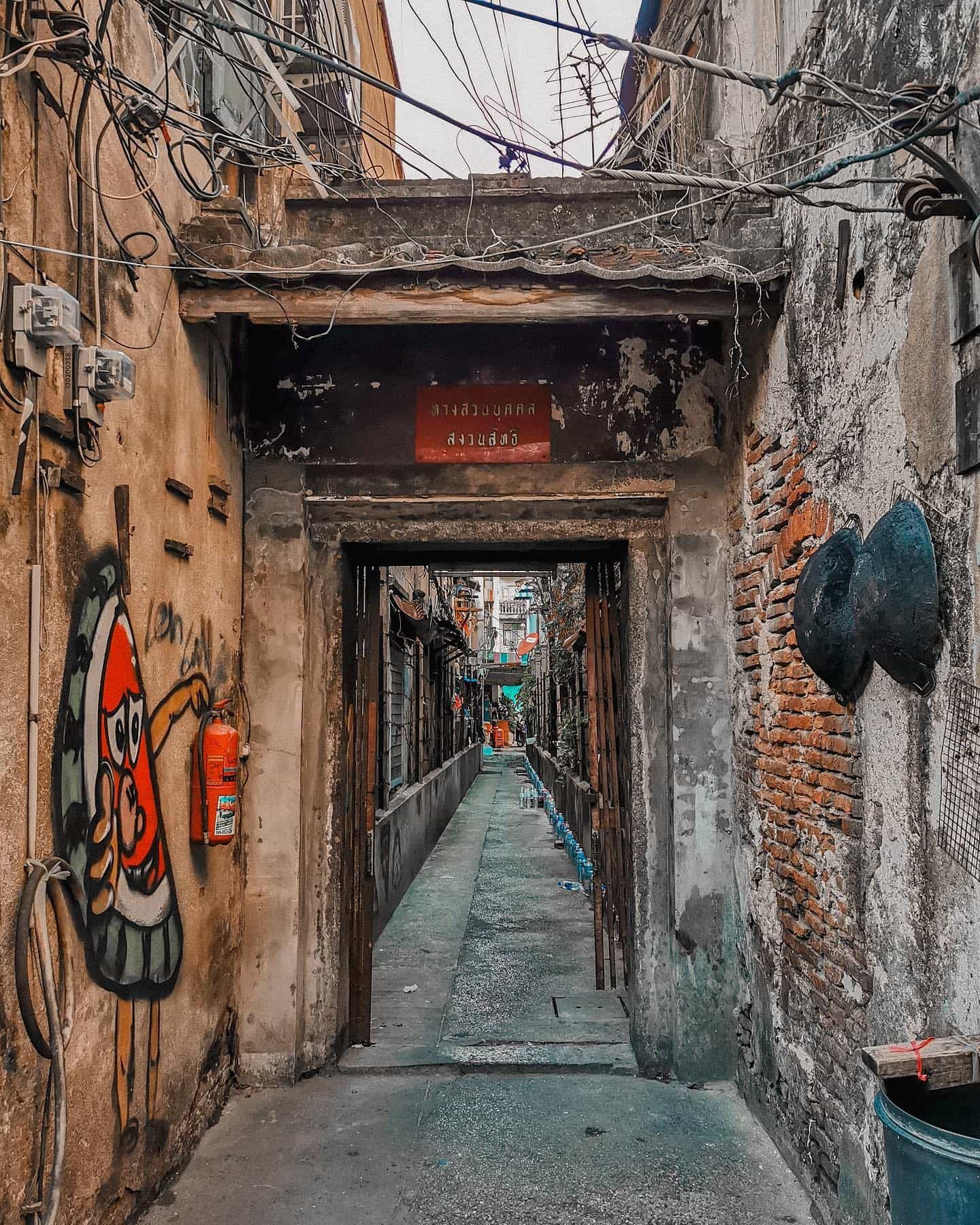
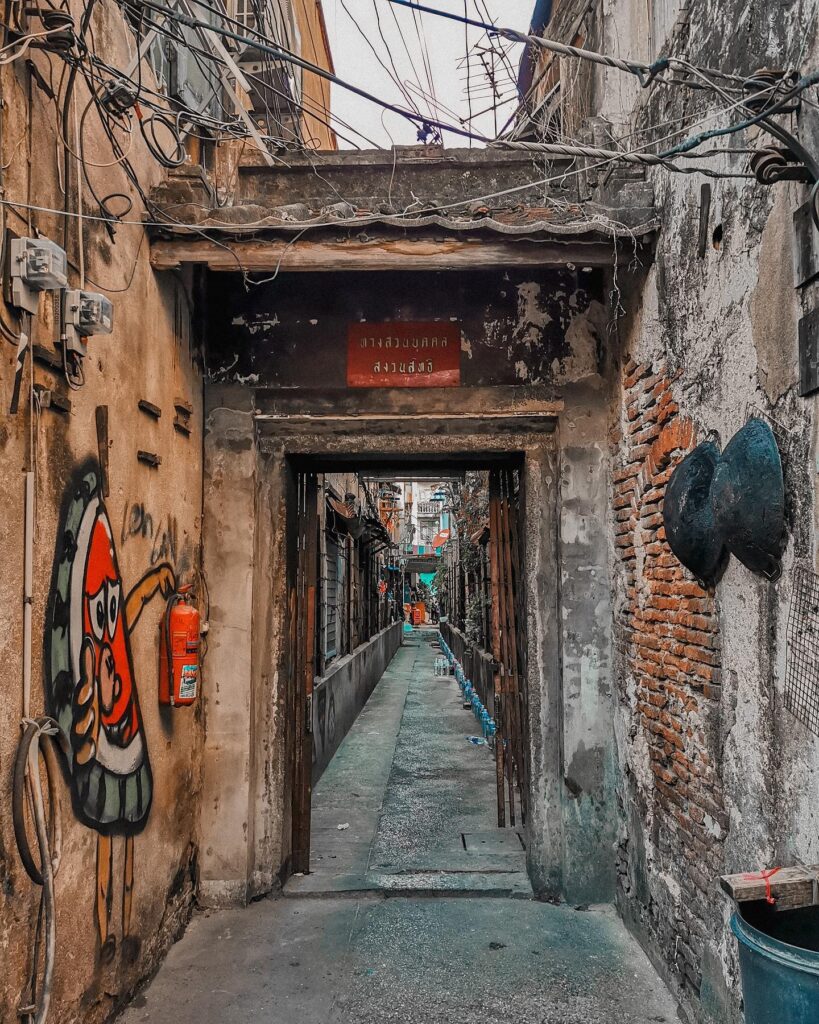
| 10:30 AM | Street Art Walk — Trok San Chao Rong Kueak + Dragon Wall | Art | Murals from the 2016 Bukruk Urban Arts Festival (Alex Face, Lolay, Sabek) plus ongoing Bangkok Design Week installations. |
| 11:00 AM | Machine Shops & Megatron Roundabout Sculpture | Art / Atmosphere | Sieng Kong’s secondhand car-part workshops with axels gears and 70 years of grease. Nearby, informal Transformers-inspired sculptures welded from car parts (look for Megatron and Bumblebee) sit where the old “Dragon Roundabout” used to be. |
| 11:30 AM | Lunch | — | See Lunch options table below. |
Full-Day Itinerary — Art, Culture, Coffee, Tea & Jazz
9:00 AM – 9:30 PM | Best for: travelers who want a slower paced day in the city with an afternoon of tea and craft shopping then live Thai jazz.
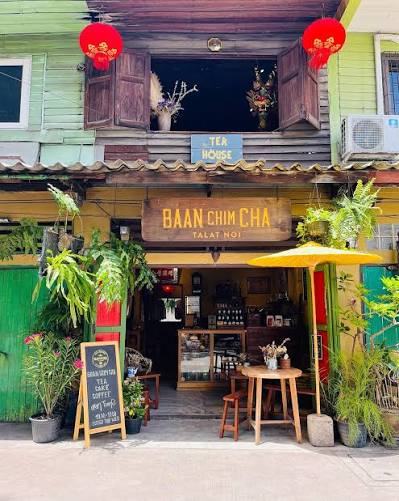
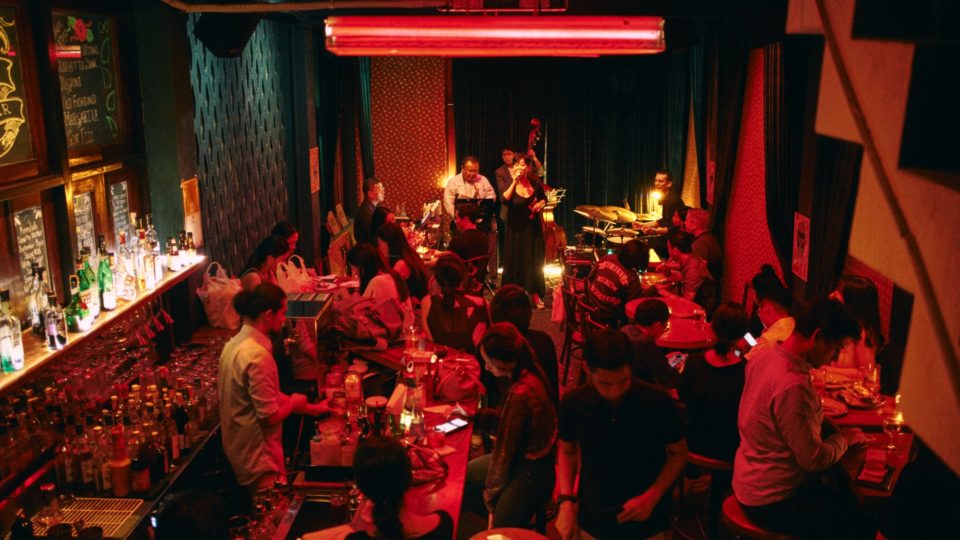
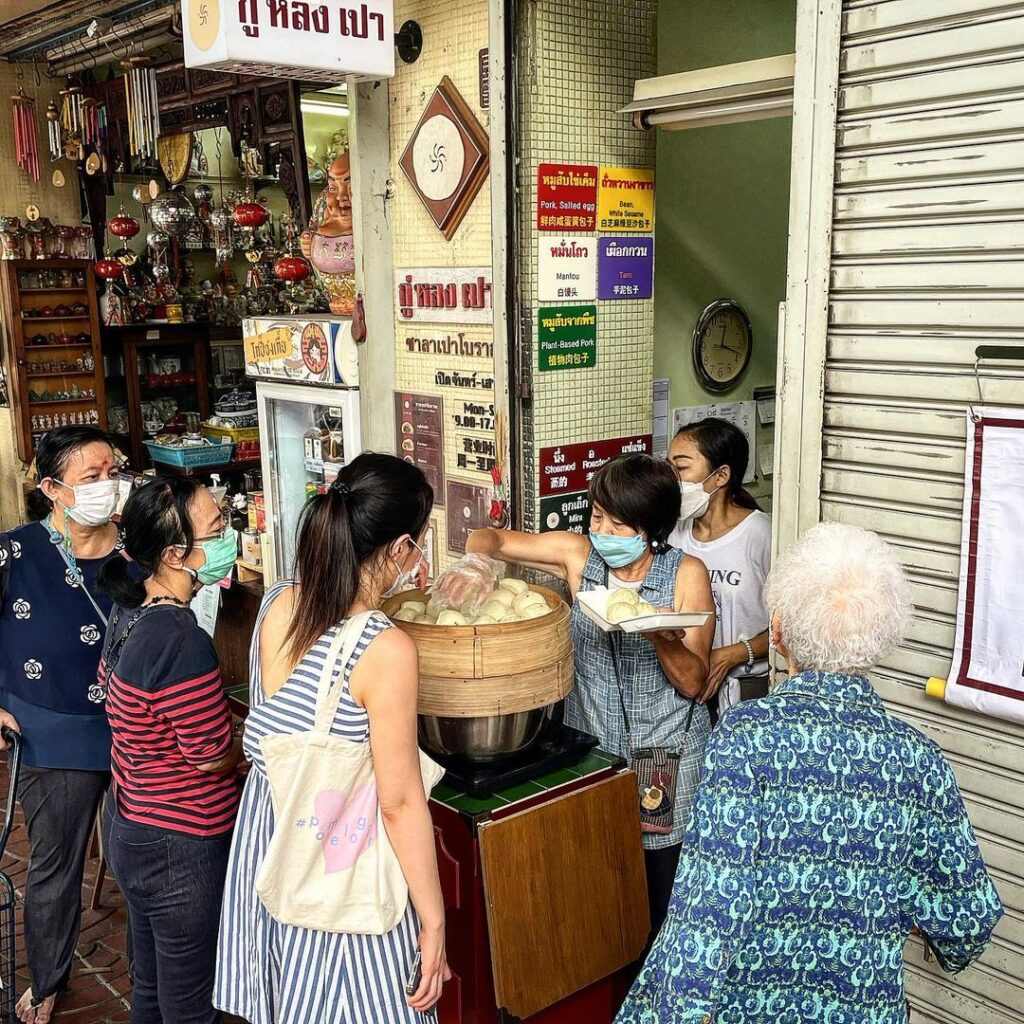
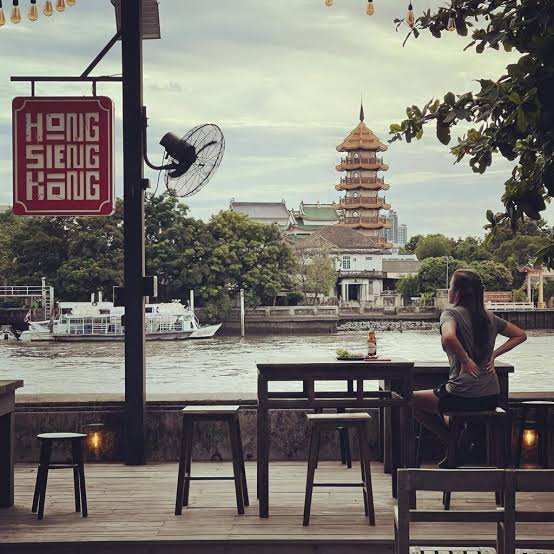
Take the same morning as the half day, then let the afternoon slow all the way down. Past lunch, the pace changes: wander aorunf Tantivejkul’s House, a restored traditional mansion with rotating exhibitions before kicking off your shoes off at Baan Chim Cha with a pot of oolong overlooking the river. Then follow the trailing wakes of long-tail boats down the Chao Phraya to the terrace at the beautifully restored period mansion of Hong Sieng Kong, an excellent location for people watching. Weave through artsy boutiques and photo opportunities aplenty on your way to Song Wat for legendary steamed bun for a dinner appetizer. And when the light finally goes, the day tips into its last act: dinner, then up a narrow staircase to Foojohn’s a room barely big enough for the band, where the night closes in low light, good company and smooth jazz.
Full Day Itinerary
| Time | Stop | Theme | Notes |
|---|---|---|---|
| 9:00–11:30 | (Follow the Half-Day route above) | Culture / Coffee-Tea / History / Art | |
| 12:00 PM | Lunch | — | See Lunch options table below. |
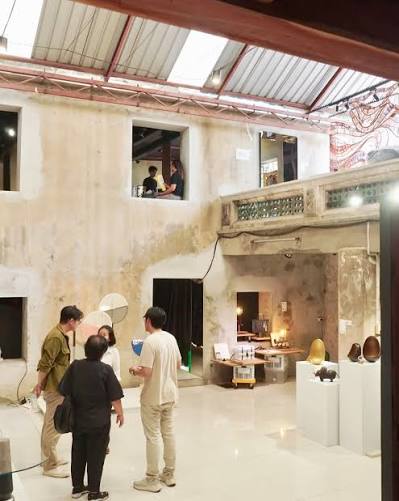
| 1:30 PM | Tantivejkul’s House (บ้านตันติเวชกุล) | Art | Heritage mansion turned art gallery, rotating exhibitions in a Sino-Portuguese shophouse. |
| 2:00 PM | Slow Tea: Baan Chim Cha | Tea | Century-old restored shophouse, shoes-off upstairs room, low tables and lanterns. Oolong, Thai red tea, floral blends with homemade pastries. |
| 3:00 PM | Riverside People Watching Rest (crossing into Song Wat) | Relaxation | Hong Sieng Kong’s terrace for “blue hour” light over the Chao Phraya, opposite Che Chin Khor Pagoda. From here the route drifts a few minutes onto Song Wat Road. |
| 3:50 PM | Gu Long Bao Artisan Bun Shop | Food / Heritage | 100+ year Teochew recipe, now 5th generation. Sweet-potato dough, steamed or baked. ~17–26 THB/bun, 3-bun minimum. |
| 4:30 PM | Optional: Mandarin Tea House | Tea | A cute riverside teahouse nearby Gu Long Bao, a good backup if the afternoon runs long. |
| 6:00 PM | Dinner | — | See Dinner options table below. |
| 8:00 PM | Foojohn Jazz Club | Jazz | Live jazz Wed–Sun. Intimate second-floor room, 50–60 seats. Reservations recommended. Look for the Pac-Man sign at street level. |
Restaurants — Lunch
| Venue | Address | Hours | Notes |
|---|---|---|---|
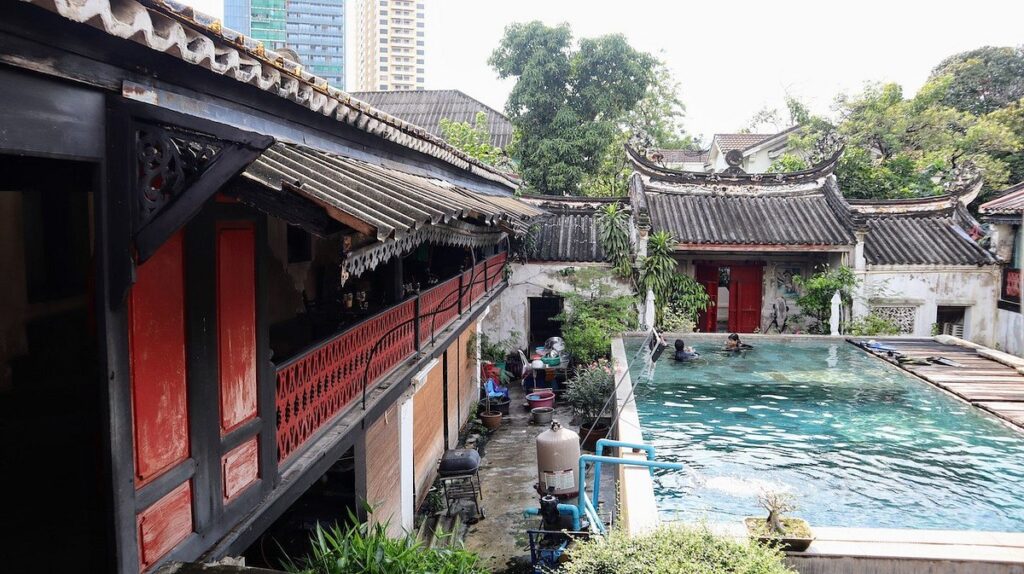
| Hong Sieng Kong | 734, 736 Soi Wanit 2, Talat Noi | 10am–8pm, closed Monday | Restored Sino-Portuguese buildings, antique-filled, good midday anchor point. One order per person minimum. |
| Gu Long Bao Artisan Bun Shop | 983 Song Wat Rd | 9am–5pm, closed Sunday | 100+ year Teochew recipe, 5th generation. Quick, cheap (~17–26 THB/bun). Takeaway only, no seating. Song Wat crossover. |
| Ped Toon Jao Ta (Duck & Noodles House) | 945 Soi Wanit 2, Talat Noi | 8:30am–3:30pm, closed Sunday | 40-year local institution. Roast duck (ped palo), stir-fried rice vermicelli. |
Restaurants — Dinner
| Venue | Address | Hours | Notes |
|---|---|---|---|
| Foojohn Building (ground floor) | 831 Soi Charoen Krung 31, Talat Noi | Evenings — pairs with jazz club above | French bistro. One stop, two experiences with the jazz club upstairs. |
| River Vibe Restaurant & Bar | River View Guesthouse, Talat Noi | Hours not confirmed — check listing | Rooftop, Thai food and drinks, river views. |
| Hong Sieng Kong (evening) | 734, 736 Soi Wanit 2, Talat Noi | 10am–8pm, closed Monday | Same venue as lunch option, different mood after dark — live music some evenings. |
A half day (about 4 hrs) covers the essential shrines, street art, and a coffee or tea stop. A full day allows time for art galleries, craft shopping, a second tea house and a special evening of live jazz.
A 200-year-old Hokkien-Chinese riverside community on the edge of Bangkok Chinatown, known for its shrines, heritage mansions, street art, and — more recently — a wave of independent cafés and tea houses. It’s also Bangkok’s official Creative District and a Bangkok Design Week venue.
It sits between Bangkok’s Chinatown (Yaowarat/Song Wat) and the Chao Phraya River, in the Samphanthawong district.